Kingdom Living: Keys to an Abundant Life

Jesus’ parable of the sower (Mark 4:1-20) reveals a powerful truth about fruitfulness in the Kingdom of God. He describes different kinds of soil representing the condition of our hearts and explains that those who receive God’s Word and nurture it will produce a harvest of thirty, sixty, or even a hundredfold. But what does it truly mean to live a fruitful and abundant life in God’s Kingdom? Here are some key principles:

1. Abide in Christ

Jesus said, “I am the vine; you are the branches. If you remain in Me and I in you, you will bear much fruit; apart from Me, you can do nothing.” (John 15:5)

Abundance comes not from our efforts alone but from remaining connected to Jesus. When we dwell in His presence, meditate on His Word, and rely on His strength, we bear lasting fruit that glorifies God.

2. Walk in the Spirit

Paul teaches that the evidence of a Spirit-filled life is the fruit of the Spirit: love, joy, peace, patience, kindness, goodness, faithfulness, gentleness, and self-control. (Galatians 5:22-23)

A life led by the Holy Spirit is marked by character transformation. When we submit to His leading, our attitudes, actions, and relationships reflect the nature of Christ, leading to true abundance.

3. Die to Self to Bear Fruit

Jesus said, “Unless a kernel of wheat falls to the ground and dies, it remains only a single seed. But if it dies, it produces many seeds.” (John 12:24)

True fruitfulness often requires sacrifice. We must be willing to let go of selfish desires, worldly ambitions, and personal comforts to embrace God’s higher purpose. When we die to ourselves, we make room for His life to grow in us and through us.

4. Serve Others With Love

Paul encourages us to “live a life worthy of the Lord and please Him in every way: bearing fruit in every good work, growing in the knowledge of God.” (Colossians 1:10)

Our lives should reflect the goodness of God through service, generosity, and acts of love. Fruitfulness is not just about internal growth; it is also demonstrated in how we impact others.

5. Sow Generously and Expect a Harvest

Paul writes, “Whoever sows sparingly will also reap sparingly, and whoever sows generously will also reap generously.” (2 Corinthians 9:6)

Abundant living comes through faithfulness in sowing seeds—whether in prayer, generosity, evangelism, or discipleship. When we invest in God’s kingdom, He multiplies our efforts far beyond what we can imagine.

6. Persevere Through Trials

Jesus said that the good soil represents “those with a noble and good heart, who hear the word, retain it, and by persevering produce a crop.” (Luke 8:15)

Fruitfulness requires patience and endurance. Challenges and setbacks will come, but those who remain steadfast in faith will see the fulfillment of God’s promises.

7. Make Disciples and Multiply

Jesus commanded, “Go and make disciples of all nations.” (Matthew 28:19)

Kingdom living is not just about personal growth; it’s about multiplying our faith by investing in others. When we pour into people’s lives, mentoring and discipling them, we create a ripple effect of Kingdom impact.

8. Pursue Eternal Fruit

Jesus said, “I chose you and appointed you so that you might go and bear fruit—fruit that will last.” (John 15:16)

The most abundant life is one that produces lasting, eternal fruit. Wealth, status, and earthly success fade away, but souls won for Christ and lives transformed by His power endure forever.

Final Thoughts

Living an abundant life in God’s Kingdom is about more than material blessings; it is about bearing spiritual fruit that impacts eternity. By abiding in Christ, walking in the Spirit, dying to self, serving others with love, sowing generously, persevering, making disciples, and focusing on eternal rewards, we can experience the “thirty, sixty, or hundredfold” harvest that Jesus promised.

Are you ready to embrace the abundant life God has called you to? Let’s dedicate ourselves to living fruitfully, reflecting His love, and bringing glory to His name!

Posted in Bible, Church, God, Jesus, Leadership, Wisdom | Tagged , , , , , , , , , , , , , , , , , , , , , , , , , | Leave a comment

Breaking Generational Patterns and Sin: Walking in Freedom

Every family has a history. Some of it is beautiful, filled with faith, love, and strength. But many of us also carry the weight of generational struggles—patterns of sin, dysfunction, or brokenness that seem to repeat from one generation to the next. Whether it’s addiction, anger, fear, poverty, divorce, or spiritual apathy, these cycles can feel impossible to break.

But the good news is that through Jesus Christ, we are not bound by the sins of the past. God offers freedom, healing, and a new legacy to those who trust in Him.

Understanding Generational Sin

One of the most well-known verses about generational sin is Exodus 34:6-7, where God declares:

“The Lord, the Lord, the compassionate and gracious God, slow to anger, abounding in love and faithfulness, maintaining love to thousands, and forgiving wickedness, rebellion, and sin. Yet He does not leave the guilty unpunished; He punishes the children and their children for the sin of the parents to the third and fourth generation.”

At first glance, this may seem unfair—why should children suffer for their parents’ mistakes? But when we look at the whole of Scripture, we see that God is not punishing innocent children for their parents’ sins. Instead, He is warning us that sin has consequences that extend beyond ourselves. When one generation walks in rebellion, the next generation is often influenced by that same way of living.

Yet, God also makes it clear that each person is responsible for their own actions:

“The one who sins is the one who will die. The child will not share the guilt of the parent, nor will the parent share the guilt of the child.” (Ezekiel 18:20)

This means that while we may feel the effects of past generations’ choices, we are not doomed to repeat them. In Christ, we have the power to walk in freedom!

How to Break Generational Patterns

1. Recognize the Pattern

The first step in breaking generational sin is acknowledging it. What patterns do you see in your family history? Are there cycles of addiction, fear, dishonesty, broken relationships, or spiritual neglect? Bring these things into the light and ask God to reveal areas where transformation is needed.

2. Repent and Renounce

Once you recognize a pattern, repent of any ways you have personally contributed to it. Even if the sin began with your ancestors, you have a choice in how you respond. Through Christ, you can renounce those sinful cycles and ask God to cleanse your heart and mind.

“If we confess our sins, He is faithful and just to forgive us our sins and to cleanse us from all unrighteousness.” (1 John 1:9)

3. Renew Your Mind with God’s Word

Breaking free from generational sin requires a transformation in thinking. If you’ve grown up believing lies (such as “I’ll never be different” or “This is just the way our family is”), replace them with God’s truth. The Bible says:

“Do not conform to the pattern of this world, but be transformed by the renewing of your mind.” (Romans 12:2)

God’s Word is the key to walking in lasting freedom.

4. Build a New Legacy

Your choices today impact future generations. If you came from a family of brokenness, you can be the one to change the story. Choose to walk in righteousness, to pursue godly character, and to lead your family in faith.

“But from everlasting to everlasting the Lord’s love is with those who fear Him, and His righteousness with their children’s children.” (Psalm 103:17)

By living in obedience to God, you create a foundation of faith that your children and grandchildren can build upon.

5. Stay Connected to the Body of Christ

Breaking free from past patterns isn’t meant to be done alone. Surround yourself with a church community, mentors, and friends who will encourage you in your walk with Christ. Share your struggles, seek counsel, and allow others to pray with you.

“Therefore confess your sins to each other and pray for each other so that you may be healed.” (James 5:16)

6. Walk in the Power of the Holy Spirit

Willpower alone cannot break spiritual bondage. But through the Holy Spirit, we have the power to overcome sin and walk in righteousness. Ask the Holy Spirit to guide you daily, to give you strength when you feel weak, and to remind you of your identity in Christ.

“Now the Lord is the Spirit, and where the Spirit of the Lord is, there is freedom.” (2 Corinthians 3:17)

A New Beginning

No matter what your family history looks like, you are not a prisoner to the past. In Christ, you are a new creation:

“Therefore, if anyone is in Christ, the new creation has come: The old has gone, the new is here!” (2 Corinthians 5:17)

God specializes in rewriting stories. He can turn a family legacy of pain into a testimony of redemption. He can break chains of addiction, fear, and dysfunction, and replace them with joy, peace, and purpose.

You are not bound by your past. You are free in Christ. Walk in that freedom, and build a new legacy for the generations to come!

Posted in Bible, Family, God, Healing, Health, Holy Spirit, Jesus, Wisdom | Tagged , , , , , , , , , , , , , , , , , , , , , , | Leave a comment

Who Does God Say I Am?

One of the most powerful truths I can embrace as a believer is my identity in Christ. The enemy often tries to deceive me into believing that I am not enough, unworthy, or unloved. But God’s Word tells a different story. When I align my thoughts with His truth, I can walk in confidence, knowing who I truly am. Here are 21 scriptures that declare who God says I am:

1. I Am a Child of God

John 1:12 – “But to all who did receive Him, who believed in His name, He gave the right to become children of God.”

2. I Am Loved

Jeremiah 31:3 – “I have loved you with an everlasting love; therefore I have continued My faithfulness to you.”

3. I Am Chosen

1 Peter 2:9 – “But you are a chosen race, a royal priesthood, a holy nation, a people for His own possession, that you may proclaim the excellencies of Him who called you out of darkness into His marvelous light.”

4. I Am Redeemed

Ephesians 1:7 – “In Him I have redemption through His blood, the forgiveness of my trespasses, according to the riches of His grace.”

5. I Am Forgiven

Colossians 1:13-14 – “He has delivered me from the domain of darkness and transferred me to the kingdom of His beloved Son, in whom I have redemption, the forgiveness of sins.”

6. I Am a New Creation

2 Corinthians 5:17 – “Therefore, if I am in Christ, I am a new creation. The old has passed away; behold, the new has come.”

7. I Am More Than a Conqueror

Romans 8:37 – “No, in all these things I am more than a conqueror through Him who loved me.”

8. I Am an Heir with Christ

Romans 8:17 – “And if I am a child, then an heir—an heir of God and fellow heir with Christ, provided I suffer with Him in order that I may also be glorified with Him.”

9. I Am Fearfully and Wonderfully Made

Psalm 139:14 – “I praise You, for I am fearfully and wonderfully made. Wonderful are Your works; my soul knows it very well.”

10. I Am Free

John 8:36 – “So if the Son sets me free, I will be free indeed.”

11. I Am His Workmanship

Ephesians 2:10 – “For I am His workmanship, created in Christ Jesus for good works, which God prepared beforehand, that I should walk in them.”

12. I Am a Citizen of Heaven

Philippians 3:20 – “But my citizenship is in heaven, and from it I await a Savior, the Lord Jesus Christ.”

13. I Am Light in the Lord

Ephesians 5:8 – “For at one time I was darkness, but now I am light in the Lord. I will walk as a child of light.”

14. I Am God’s Temple

1 Corinthians 6:19-20 – “Or do I not know that my body is a temple of the Holy Spirit within me, whom I have from God? I am not my own, for I was bought with a price. So I will glorify God in my body.”

15. I Am Strengthened in Christ

Philippians 4:13 – “I can do all things through Him who strengthens me.”

16. I Am Sealed with the Holy Spirit

Ephesians 1:13 – “In Him I also, when I heard the word of truth, the gospel of my salvation, and believed in Him, was sealed with the promised Holy Spirit.”

17. I Am Salt and Light

Matthew 5:13-14 – “I am the salt of the earth… I am the light of the world. A city set on a hill cannot be hidden.”

18. I Am Protected

Isaiah 54:17 – “No weapon that is fashioned against me shall succeed, and I shall refute every tongue that rises against me in judgment. This is the heritage of the servants of the Lord.”

19. I Am Never Alone

Deuteronomy 31:6 – “I will be strong and courageous. I will not fear or be in dread of them, for it is the Lord my God who goes with me. He will not leave me or forsake me.”

20. I Am His Ambassador

2 Corinthians 5:20 – “Therefore, I am an ambassador for Christ, God making His appeal through me. I implore others on behalf of Christ to be reconciled to God.”

21. I Am Victorious

1 John 5:4 – “For I have been born of God and I overcome the world. And this is the victory that has overcome the world—my faith.”

Walking in My God-Given Identity

The way I see myself determines how I live. When I embrace my identity in Christ, I can walk boldly, love freely, and live purposefully. These 21 scriptures are just a glimpse of who God says I am. I will let them shape my thoughts, my heart, and my actions.

I am loved, chosen, redeemed, and victorious. I will walk in that truth today!

Posted in Bible, Family, God, Healing, Health, Holy Spirit, Jesus, Wisdom | Tagged , , , , , , , , , , , , , , , , , , , , , , , , , , , | Leave a comment

What It Means to Follow Jesus

In the Gospel of Mark, Jesus calls His disciples with a simple yet life-altering invitation:

“Follow Me and be My disciple.” (Mark 1:17, NLT)

This call was not just for Peter, Andrew, James, and John—it is for every believer who desires to walk with Jesus. But what does it truly mean to follow Jesus and be His disciple? Let’s explore three key aspects.

1. Leaving Everything Behind

When Jesus called the first disciples, they left their nets and followed Him immediately. This represents a willingness to surrender everything—our plans, ambitions, and even our comfort—to pursue Christ.

“They left their nets at once and followed Him.” (Mark 1:18, NLT)

Being a disciple means that Jesus becomes our highest priority. It doesn’t necessarily mean abandoning our jobs or families, but it does mean holding everything loosely and making Him Lord over every area of our lives.

2. Learning from Jesus

A disciple is a learner, someone who sits at the feet of Jesus, soaking in His teaching and applying it to daily life. The disciples spent three years walking with Jesus, observing His actions, and absorbing His words.

Today, we learn from Jesus by studying the Bible, spending time in prayer, and seeking to live out His teachings. True discipleship is not just about acquiring knowledge—it’s about transformation.

“Take My yoke upon you. Let Me teach you, because I am humble and gentle at heart, and you will find rest for your souls.” (Matthew 11:29, NLT)

3. Living Like Jesus

Following Jesus means living as He lived. That means loving others sacrificially, serving with humility, and obeying the will of the Father.

“Those who say they live in God should live their lives as Jesus did.” (1 John 2:6, NLT)

Jesus didn’t call His disciples to a comfortable life—He called them to a life of self-denial and service. He said:

“If any of you wants to be My follower, you must give up your own way, take up your cross, and follow Me.” (Mark 8:34, NLT)

Being a disciple is not just about believing in Jesus; it’s about becoming like Him. It means forgiving when it’s hard, loving when it’s inconvenient, and trusting God even when we don’t understand.

The Call Is for You

The call to follow Jesus is as real today as it was 2,000 years ago. He still says, “Follow Me.” Will you respond?

To follow Jesus is to make Him your Lord, learn from Him daily, and live a life that reflects His love and truth. It’s the greatest adventure you will ever embark on.

Are you willing to say “yes” to His call?


Posted in Bible, Church, God, Jesus, Worship | Tagged , , , , , , , , , , , , , , , | Leave a comment

Worship Team: Overcoming Insecurities

Insecurity is something every worship team member faces at some point. Whether it’s doubting your musical ability, feeling like you don’t belong, or comparing yourself to others, insecurity can be a real struggle. If left unchecked, it can hinder your worship, your confidence, and your ability to serve your church well.

The good news? God doesn’t want us to live in insecurity. He calls us to trust Him, walk in confidence, and serve with joy. Here are some biblical principles and practical steps to overcome insecurity as a worship team member.

1. Remember Who You’re Worshiping

Worship is about God, not us. When we focus too much on ourselves—our performance, our mistakes, or what others think—we lose sight of why we are there.

Scripture: “Fixing our eyes on Jesus, the author and perfecter of our faith.” (Hebrews 12:2)

Action Step: Before every rehearsal or service, take a moment to shift your focus to God. Pray, worship privately, and remind yourself that your purpose is to glorify Him, not to impress people.

2. Recognize That God Called You

If you are serving on the worship team, it’s because God has given you a gift and an opportunity. Your role is not an accident. He doesn’t call the perfect—He equips those He calls.

Scripture: “For we are God’s handiwork, created in Christ Jesus to do good works, which God prepared in advance for us to do.” (Ephesians 2:10)

Action Step: Instead of dwelling on your weaknesses, thank God for the opportunity to serve. Trust that He has placed you on the team for a reason.

3. Stop Comparing Yourself to Others

Comparison is one of the biggest sources of insecurity. Whether you feel inferior to someone more talented or superior to someone struggling, comparison always leads to discouragement or pride.

Scripture: “Pay careful attention to your own work, for then you will get the satisfaction of a job well done, and you won’t need to compare yourself to anyone else.” (Galatians 6:4 NLT)

Action Step: Celebrate the strengths of others instead of envying them. Focus on being the best version of who God created YOU to be.

4. Let God’s Truth Replace Your Fears

The enemy loves to whisper lies like, “You’re not good enough,” or “You’ll mess up.” But God’s truth says otherwise.

Scripture: “Then you will know the truth, and the truth will set you free.” (John 8:32)

Action Step: Write down scriptures that counteract your fears. When insecurity creeps in, replace it with truth.

5. Prepare and Practice with Excellence

Sometimes insecurity comes from simply not being prepared. The more confident you are in your skill, the less room there is for doubt.

Scripture: “Whatever you do, work at it with all your heart, as working for the Lord, not for human masters.” (Colossians 3:23)

Action Step: Rehearse at home, listen to your songs, and show up prepared. The more effort you put in, the more at peace you’ll feel.

6. Encourage One Another

Sometimes we feel insecure because we don’t hear encouragement from others. The best way to change that culture is to start being an encourager yourself!

Scripture: “Therefore encourage one another and build each other up.” (1 Thessalonians 5:11)

Action Step: Each week, find at least one person on your team to encourage. A simple “You played great today” or “I love worshiping with you” can make a huge difference.

7. Trust God with Your Weaknesses

You will make mistakes. You won’t always feel 100% confident. But God’s grace is greater than your imperfections. He is strong where we are weak.

Scripture: “My grace is sufficient for you, for My power is made perfect in weakness.” (2 Corinthians 12:9)

Action Step: Instead of fearing failure, see every challenge as an opportunity to rely more on God. Surrender your weaknesses to Him in prayer.

Final Thought

Your role in worship is not about perfection—it’s about obedience, faithfulness, and a heart fully surrendered to God. Let go of insecurity and step into the confidence that comes from knowing who you are in Christ. When you focus on Him, you’ll find freedom, joy, and a deeper love for worship.

What about you? Have you struggled with insecurity on the worship team? What has helped you overcome it? Share in the comments below!

Posted in Bible, Church, God, Jesus, Leadership, Music, Wisdom, Worship | Tagged , , , , , , , , , , , , , , , , , , , , | Leave a comment

Worship Leaders: Lessons from the Prayer Life of Jesus

As worship leaders, our public ministry should always flow from our private devotion. If there’s anyone we should learn from when it comes to prayer, it’s Jesus. His life was marked by constant communication with the Father. He didn’t just teach on prayer—He lived it.

Let’s explore Jesus’ prayer habits and how they can shape our lives and ministries as worship leaders.


1. Jesus Prayed Early and Often

“Very early in the morning, while it was still dark, Jesus got up, left the house, and went off to a solitary place, where He prayed.” – Mark 1:35

Jesus made prayer a priority, even in His busiest seasons. After healing many and ministering late into the night, He rose early to be with the Father.

Application for Worship Leaders:

  • Start your day with God: Before you pick up your instrument or choose your setlist, pick up your Bible.
  • Establish a rhythm: Consistency matters more than length. Find a time that works for you—early mornings, lunch breaks, or evenings.
  • Pray for your team: Lift up your band members, vocalists, tech crew, and church leaders.

2. Jesus Prayed in Solitude

“But Jesus often withdrew to lonely places and prayed.” – Luke 5:16

Jesus sought solitude to be with the Father, especially during demanding seasons of ministry. He knew that intimacy with God requires time away from the crowd.

Application for Worship Leaders:

  • Step away from the noise: Rehearsals, meetings, and services are important, but so is silence. Unplug and listen.
  • Retreat regularly: Take intentional times to fast, reflect, and reconnect with God.
  • Pray before the platform: Don’t let the stage be your first place of worship—let it be the overflow of your private devotion.

3. Jesus Prayed Before Major Decisions

“One of those days Jesus went out to a mountainside to pray, and spent the night praying to God. When morning came, He called His disciples and chose twelve of them.” – Luke 6:12-13

Before choosing His disciples, Jesus spent the night in prayer. He sought the Father’s guidance before making key leadership decisions.

Application for Worship Leaders:

  • Pray before you plan: Ask for the Holy Spirit’s direction when selecting songs, building your team, or planning services.
  • Seek God’s wisdom in team decisions: Pray before adding new team members, making leadership changes, or introducing new songs.
  • Discern, don’t just decide: Don’t rely solely on talent or preferences—listen for God’s leading.

4. Jesus Prayed with His Disciples

“After He had taken leave of them, He went up on the mountain to pray.” – Mark 6:46

Jesus modeled prayer to His disciples and also prayed with them. They didn’t just learn from His sermons but from His lifestyle.

Application for Worship Leaders:

  • Pray with your team: Open every rehearsal with prayer. Close every service with thanksgiving. Pray before soundcheck.
  • Model a life of prayer: Let your team see that prayer isn’t just a ritual—it’s your lifeline.
  • Create a culture of intercession: Encourage your team to pray for one another and for the congregation.

5. Jesus Prayed Through Sorrow and Struggle

“Going a little farther, He fell with his face to the ground and prayed, ‘My Father, if it is possible, may this cup be taken from Me. Yet not as I will, but as You will.’” – Matthew 26:39

In Gethsemane, Jesus prayed through agony. He didn’t hide His pain from the Father but surrendered fully to His will.

Application for Worship Leaders:

  • Bring your burdens to God: Don’t carry the weight of ministry alone—lay it at His feet.
  • Pray through the hard seasons: When you feel empty, misunderstood, or discouraged, let prayer be your refuge.
  • Surrender your ministry: It’s not about building your platform—it’s about building His Kingdom.

6. Jesus Prayed for His Followers

“I pray for them. I am not praying for the world, but for those You have given Me, for they are Yours.” – John 17:9

In John 17, we see Jesus interceding for His disciples and for future believers. His heart was for those He led and those who would come to believe through their ministry.

Application for Worship Leaders:

  • Intercede for your congregation: Pray that the songs you sing would lead people into God’s presence.
  • Pray for your leaders and pastors: Cover them in prayer as they shepherd the church.
  • Pray for the next generation of worship leaders: Ask God to raise up those who will lead after you.

7. Jesus Prayed in Complete Surrender

“Father, into Your hands I commit my spirit.” – Luke 23:46

Even in His final moments, Jesus’ heart was aligned with the Father’s will. His life began, continued, and ended with prayer.

Application for Worship Leaders:

  • Commit your ministry to God: It’s His work, not yours. Be faithful and leave the results to Him.
  • Pray for a heart of humility: Keep your eyes on Jesus, not on applause or approval.
  • Finish well: Let your life and ministry be a testimony of faithfulness to the end.

Final Thought: Lead from the Secret Place

As worship leaders, we can’t lead people where we haven’t been. Our effectiveness on stage is directly connected to our devotion offstage. Jesus didn’t pray because He had to—He prayed because He loved the Father. That’s where true power in ministry begins.

So, before you pick up the guitar or microphone, talk to the Father. Before you sing to others, sing to Him. Before you lead your team, follow Him. Because in the end, the greatest thing you’ll ever bring to the platform is not your voice—it’s your heart.


How has your prayer life shaped your ministry? Share your thoughts in the comments below—I’d love to hear from you!

Posted in Bible, Church, God, Health, Holy Spirit, Jesus, Leadership, Music, Wisdom, Worship | Tagged , , , , , , , , , , , , , , , , , | Leave a comment

What Worship Leaders Can Learn from the Plans for the Tabernacle in Exodus

The detailed instructions in Exodus for building the Ark of the Covenant, the lampstand, the table of showbread, and the Tabernacle are more than ancient history—they are rich with lessons for today’s worship leaders and teams. Here are key takeaways to inspire your worship ministry:

1. God Desires to Dwell Among His People

The Tabernacle was a physical representation of God’s presence among His people. Today, we carry that presence within us (1 Corinthians 3:16). Our role as worship leaders is to help people become aware of and respond to God’s presence. Every rehearsal, setlist, and moment on stage should point people to encounter Him.

2. Worship Requires Reverence and Obedience

The precise instructions for every element of the Tabernacle show that God cares how He is worshiped. Excellence and faithfulness matter. As worship leaders, we should prepare our hearts and skills, knowing that our service is holy work. Are we practicing our instruments, preparing our voices, and living lives that honor God?

3. Christ Fulfills the Symbols of Worship

  • The Ark of the Covenant: God’s presence and covenant. Today, Jesus is our mediator (Hebrews 9:15). Let our worship reflect gratitude for His sacrifice.
  • The Lampstand (Menorah): The light in the Holy Place. Jesus is the Light of the World (John 8:12), and we are called to reflect that light.
  • The Table of Showbread: A symbol of God’s provision. Jesus is the Bread of Life (John 6:35). Communion and songs about God’s provision remind us of this.
  • The Tabernacle: The place to meet God. Now, we enter His presence through Christ (Hebrews 10:19-22).

4. Excellence and Skill Matter in Worship

God gifted Bezalel and Oholiab with skills to craft the Tabernacle beautifully (Exodus 31:1-5). Worship leaders and teams should pursue excellence in their craft. Rehearse well, learn your parts, and create a space where beauty points people to God.

5. Generosity Fuels God’s Work

The Tabernacle was built from the willing gifts of the people (Exodus 35:29). Generosity in our time, talents, and resources builds the worship ministry. Serve with joy, give your best, and encourage your team to do the same.

6. Holiness and Preparation Matter

The Tabernacle had sacred spaces and rituals for approach. Today, while we approach God through grace, preparation still matters. Pray before services, come spiritually ready, and honor the privilege of leading others into God’s presence.

7. God is in the Details

The specific instructions for every element of the Tabernacle remind us that details matter to God. Plan your worship services thoughtfully. Choose great songs that align with God’s Word. Balance your setlists musically and spiritually. Excellence in the details honors God and serves His people.

Final Thought: Lead with Awe and Gratitude

As you lead, you are part of a long tradition of creating spaces for people to meet with God. Let the lessons from Exodus inspire you to keep your eyes on Jesus, the perfect sacrifice, and lead with reverence, excellence, and joy.

How can you apply these principles to your worship ministry this week?

Posted in Bible, Church, God, Jesus, Leadership, Music, Worship | Tagged , , , , , , , , , , , , , , , , , , , , | 1 Comment

The Fear of the Lord: A Key for Worship Leaders

Proverbs 16:6 says, “By fearing the Lord, people avoid evil.” For worship leaders, the fear of the Lord is essential—not a fear of punishment, but a reverent awe that shapes how we lead, serve, and inspire others in worship.

What Is the Fear of the Lord?

The fear of the Lord is a deep respect for His holiness, justice, and power. It means leading worship with humility, knowing that we serve a holy God. As Proverbs 9:10 says, “The fear of the Lord is the beginning of wisdom, and knowledge of the Holy One is understanding.”

Why Worship Leaders Need the Fear of the Lord

  1. It Keeps Our Worship Pure: We lead with sincerity, seeking God’s presence over performance.
  2. It Shapes Our Ministry: Our decisions—from song choices to team culture—reflect God’s heart.
  3. It Builds Character: Integrity, humility, and honesty become our foundation.
  4. It Deepens Our Anointing: When we revere God, He draws close and moves powerfully in our services.

Cultivating the Fear of the Lord as Worship Leaders

  1. Lead from the Word: Saturate your setlists and heart with lyrics that align with Scripture.
  2. Pray for Reverence: Ask God for humility as you serve.
  3. Model Godliness: Lead your team by example—on and off the platform.
  4. Worship Privately: Let your personal devotion exceed your public expression.
  5. Honor the Platform: Approach your role with gratitude and awe.

Blessings for Worship Leaders Who Fear the Lord

  • Anointed Ministry: God’s presence will mark your worship (Psalm 34:7).
  • Provision and Guidance: He will meet your needs and lead your team (Psalm 34:9).
  • Longevity in Ministry: A God-centered heart sustains you (Proverbs 10:27).
  • Deeper Friendship with God: You’ll know His heart (Psalm 25:14).

Final Thought

Worship leadership is not about performance but presence. As you lead with a heart that fears the Lord, your worship will carry authenticity, power, and anointing. Embrace the fear of the Lord—it is the beginning of wisdom and the foundation of a thriving worship ministry.

Posted in Bible, Church, God, Health, Jesus, Leadership, Wisdom, Worship | Tagged , , , , , , , , , , , , , , , , , , | Leave a comment

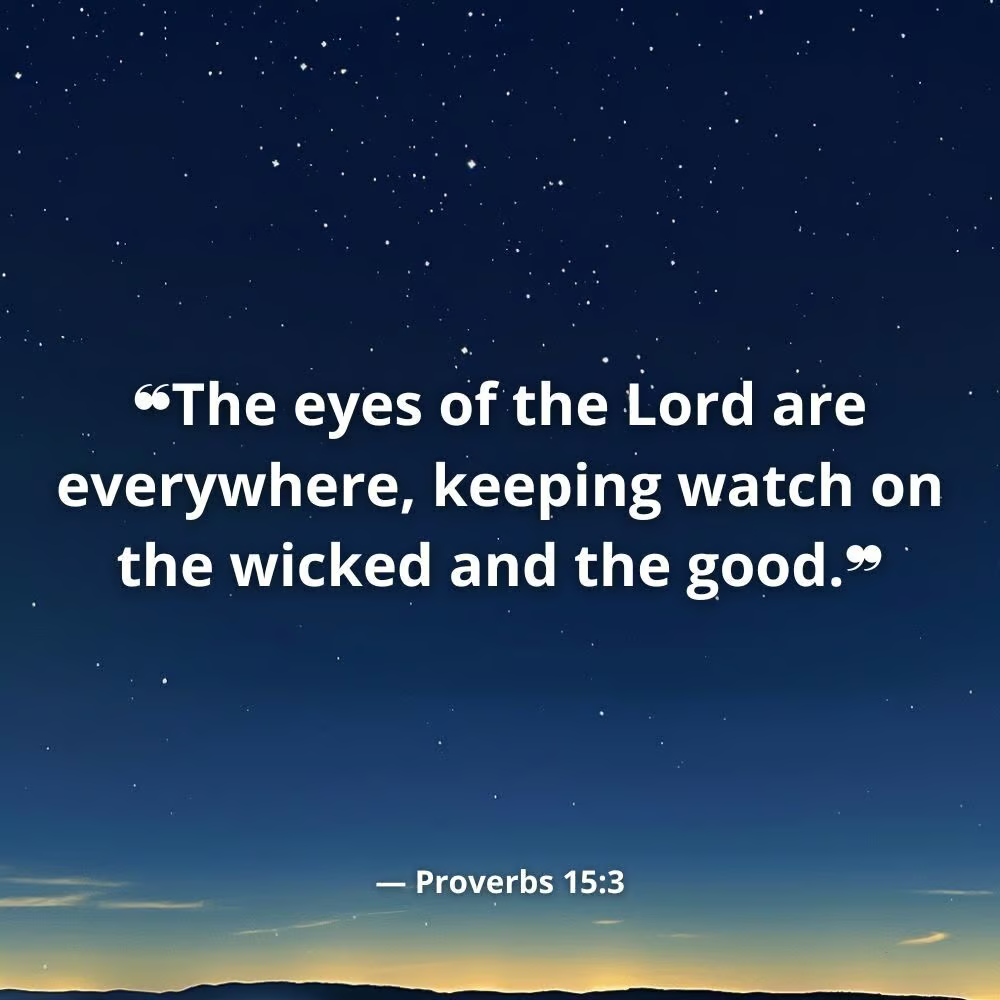
Living Under God’s Watchful Eye: How Proverbs 15:3 Should Shape Our Behavior

“The Lord is watching everywhere, keeping His eye on both the evil and the good.” — Proverbs 15:3 (NLT)

This short but powerful verse reminds us of a truth that is both sobering and comforting: God sees everything. Nothing escapes His attention. His watchful eye is on every thought, word, and deed, from the public stage to the private heart. Knowing this, how should we live? Here are five ways this truth should shape our behavior:

1. Live with Integrity (Because God Sees Everything)

When we realize that God sees both the good and the bad, it should inspire us to live with integrity. True integrity means doing what is right even when no one else is watching—because God always is.

  • When tempted to cut corners, we remember that God knows our motives.
  • When faced with the choice to lie or speak the truth, we choose honesty.
  • When online, we guard our eyes and our heart, knowing nothing is hidden from Him.

“People may be pure in their own eyes, but the Lord examines their motives.” — Proverbs 16:2

2. Flee from Sin (Because Evil Is Not Hidden)

Sometimes people act as if secrecy makes sin safe. But there are no secrets with God. His eyes pierce the darkness, and every hidden deed will come to light. The awareness of His presence should lead us to repentance and holiness.

  • Let’s be quick to confess sin rather than cover it up.
  • Let’s walk away from temptation, knowing that God is watching, not to condemn us but to call us to something better.

“Nothing in all creation is hidden from God. Everything is naked and exposed before His eyes, and He is the one to whom we are accountable.” — Hebrews 4:13

3. Be Encouraged in Doing Good (Because He Sees Every Sacrifice)

While God sees the bad, He also sees the good—every small act of kindness, every moment of patience, and every unseen sacrifice. This is incredibly encouraging, especially when we feel unnoticed or unappreciated.

  • He sees the parent quietly caring for a child.
  • He notices the volunteer serving faithfully behind the scenes.
  • He honors the prayers prayed in secret.

No good deed is wasted when God is the witness.

“Then your Father, who sees what is done in secret, will reward you.” — Matthew 6:4

4. Trust God’s Justice (Because He Judges Rightly)

This proverb reminds us that nothing escapes God’s justice. He sees every injustice and every act of evil. Even when it seems like the wicked prosper, God has not missed a thing. His justice may seem slow by our standards, but it is sure.

  • Rather than seeking revenge, we can leave justice in God’s hands.
  • Rather than being discouraged by evil in the world, we can trust that God will make all things right in His time.

“Don’t say, ‘I will get even for this wrong.’ Wait for the Lord to handle the matter.” — Proverbs 20:22

5. Seek a Pure Heart, Not Just Good Behavior (Because God Sees Beyond Appearances)

We can fool people, but we can’t fool God. He sees not only what we do but why we do it. The Pharisees in Jesus’ time looked righteous outwardly but had hearts far from God. Let’s not fall into the same trap.

  • Are we generous because we love people or because we want applause?
  • Do we serve to glorify God or to boost our reputation?
  • Is our worship genuine or just routine?

“The Lord doesn’t see things the way you see them. People judge by outward appearance, but the Lord looks at the heart.” — 1 Samuel 16:7


Living Under His Loving Gaze

For those who walk with God, His watchful eye is not something to fear but something to treasure. His gaze is the gaze of a loving Father—guiding, protecting, and delighting in His children.

So, let us live every moment as if it is in His presence—because it is. Let us choose what is right, trust Him with justice, and find joy in knowing that no act of faithfulness goes unseen. The Lord is watching everywhere. May that truth shape our hearts and our lives.

Prayer:
Lord, help me to live every day knowing that Your eyes are on me. Search my heart, guide my steps, and let my life be pleasing to You. Amen.

Posted in Bible, God, Leadership, Wisdom | Tagged , , , , , , , , , , , , , | Leave a comment

The Last Words of Jesus on the Cross: Lessons for Every Christian

The final words of Jesus on the cross are among the most profound statements in all of Scripture. Spoken in His last moments, they provide deep insight into His mission, His heart, and the lessons we, as His followers, can apply to our lives. As we reflect on these seven statements, may we draw closer to Him and embrace the truths He revealed in His suffering.

1. “Father, forgive them, for they do not know what they are doing.” (Luke 23:34)

Even in His agony, Jesus extended forgiveness to those who crucified Him. This reveals the heart of Christ—one of mercy and love. As Christians, we are called to forgive others, even when they hurt us deeply. Just as Jesus forgave those who wronged Him, we, too, must choose forgiveness over bitterness.

Lesson: True forgiveness is not based on whether someone deserves it, but on our willingness to reflect Christ’s love.

2. “Truly I tell you, today you will be with me in paradise.” (Luke 23:43)

Jesus spoke these words to the repentant thief on the cross beside Him. This moment demonstrates the power of grace—salvation is available to all who put their trust in Jesus, no matter their past.

Lesson: It is never too late for a person to turn to Christ. Salvation is a gift of grace, not earned by good works but received by faith.

3. “Woman, here is your son.” (John 19:26-27)

In the midst of His suffering, Jesus ensured that His mother, Mary, was cared for. He entrusted her to the disciple John, showing His deep concern for family and responsibility.

Lesson: Christians are called to care for their families and those in need. Even in our struggles, we should not neglect our duty to love and support those closest to us.

4. “My God, my God, why have you forsaken me?” (Matthew 27:46)

In this moment, Jesus bore the full weight of sin, experiencing separation from the Father. This fulfilled prophecy (Psalm 22) and highlighted the immense cost of our salvation.

Lesson: Jesus understands our deepest pain and feelings of abandonment. We can trust Him even when we feel alone, knowing He has already carried our burdens.

5. “I am thirsty.” (John 19:28)

This statement highlights Jesus’ humanity. He suffered physically just as we do. But it also fulfilled prophecy (Psalm 69:21), reminding us that everything He endured was part of God’s redemptive plan.

Lesson: Jesus fully understands human suffering. We can come to Him in our weakest moments, knowing He empathizes with our pain.

6. “It is finished.” (John 19:30)

With these words, Jesus declared that His mission was complete. The debt of sin was paid in full, and salvation was made available to all who believe in Him.

Lesson: We do not need to strive for salvation—it is finished. Our faith should rest in Christ’s completed work, not in our own efforts.

7. “Father, into your hands I commit my spirit.” (Luke 23:46)

Jesus surrendered His life to the Father, demonstrating complete trust even in death. His final breath was an act of faith and obedience.

Lesson: We are called to live in full surrender to God, trusting Him with our lives and our future.

Final Thoughts

The last words of Jesus on the cross are not just historical statements; they are powerful lessons that shape our faith. They teach us about forgiveness, grace, responsibility, suffering, and trust in God. As we meditate on these words, may we live in a way that reflects the love and sacrifice of Christ.

What stands out most to you about Jesus’ last words? How can you apply these lessons to your life today? Let’s continue the conversation and encourage one another in our journey of faith.

Posted in Bible, Family, God, Jesus | Tagged , , , , , , , , , , , , , , , | Leave a comment